Summary
Angelo Sedillo, incarcerated since age 15 under New Mexico’s Serious Youthful Offender law, reflects on his transformation from a traumatized, gang-involved youth to a writer, activist, and mentor. He describes how prison culture—violent, predatory, and lacking support—hindered his development, especially due to being denied educational opportunities for over 20 years. Sedillo argues that sentencing youth as adults exacerbates harm rather than rehabilitation, emphasizing that young people are capable of change. He urges policymakers to reject “tough on crime” approaches and instead invest in alternatives that support growth, education, and redemption for youth.
My name is Angelo Sedillo. I’m a 41-year-old man who has been in prison for 27 years. I was 15 years old when I was sentenced automatically as an adult under New Mexico’s Serious Youthful Offender law and sent to prison for Life.
I grew up in Roswell, and like so many young people, I committed my crime at a time when I was an angry, lost, misguided teen, living day to day in survival mode.
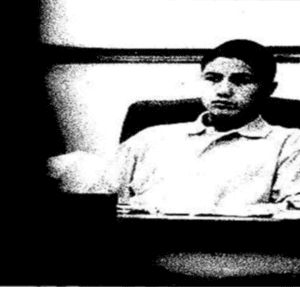
In the early years of my upbringing, I was caught in the allure that captures so many young people—the gang culture. For me it was easy to do back then, with a father who had committed suicide, various friends and cousins murdered, and with my parents fresh off divorce, we were all in shambles and seemed to be living as a haunted family. My escape was the streets where I emulated a culture of violence while struggling against it. Back then it was more like a rite of passage, or so I thought. I entered prison uneducated and unable to enroll in academics.
Like majority of juveniles with adult sentences, I let the system CHOOSE who I would be, easily succumbing to the “group think” where for decades I existed hurting others, in violence, and perpetuating one survival mode for another. A changing moment of self-realization came after the death of my grandfather, who despite my many setbacks and always being in trouble or in seg every time he came to visit… seeing myself through his eyes allowed me to start a new trajectory that changed mylife.
Today I am a writer. A poet. A contributor of the Prison Journalism Project where I serve my peers through their storytelling. I’m an education for Lifers activist and I also work with organizations to write at risk youth to share my story and try to dissuade them from the similar spaces we grew up knowing.
I write today, not as just a child sentenced as an adult, but as someone who has seen and experienced the effects of coming to prison at a tender age where the mind is still highly impressionable and susceptible to the elements inside that thrive after the fact of an adult sentence. I know that with the skyrocketing gun violence committed by youth that lawmakers are looking for a quick cure all, or fix, or to gain momentum in the tough on crime stance by seeming to address these gun violence issues.
“Prison culture is a predacious environment incapable of understanding weakness, fragility, and love.”
I would ask you to consider and caution in using these tragedies as a means to propel more children into such an uncaring and ill-equipped environment, where predation and a lack of empathy are championed into each offender coming through its gates- more so with young people.
I can tell you this because of my own experience of coming to prison at age 15, where I can also shed light as to there being no positive or warm receptions taking place; nor concerned men looking out for my welfare or ready to set out in tutelage to mold me into the best version of myself.
Prison culture is a predacious environment incapable of understanding weakness, fragility, and love. I was one of those ‘youths brought to heel’ where no alternative of amenability awaited me in prison and no academic openings calling my curiosity to stay out or away from the negative elements.
Perhaps one of the biggest secrets and shames after a child is sentenced as an adult, particularly those condemned with Life sentences is you learn that you are disqualified from participating in any education endeavor, via the Inmate Literacy Act. Perhaps it was designed to be this way which deprives you of any schooling that could aid in a young person’s rehabilitation. You may assume that education would be offered upon request, but this is untrue. Many young people are entered into an education limbo with vague denials citing “policy” or the Article 3 of the Inmate Literacy Act. And I was excluded from education enrollment for over 20 years and was only allowed to enroll after showing my recommendation from the parole board that I obtain a GED.
Without positive outlets or reinforcements from our institutions that house young people, many fall into pits of despair or familial despondency from exhaustion and are easily swayed to the elements that have taken so many of our young people and brain washed them into a culture of violence, ultimately doing more harm than any prison rehabilitative programming can address.
32 years ago, the grand social experiment of “tough on crime” was ushered in under the Clinton era, the same decisive rhetoric today is eerily similar. Today the rhetoric that children as SUPERPREDATORS or kids lacking conscience or without empathy who are seen as just in need of a cage… this offers them no chance ofgrowth or skills to transcend the culture that has high-jacked their future and autonomy. We’ve seen the mistakes that fear mongering and disproportionate justice can have.
Young people aren’t just MONSTERS we must bring to heel. They aren’t irredeemable. We know now how science and brain studies have shown their thinking can be amended, they can redeem themselves. Sending them to prison earlier or at younger ages isn’t the way, I beg our lawmakers to reconsider.
Choose our children. Choose another way.
Respectfully Yours,

Angelo Sedillo
Prison of New Mexico, Santa Fe